

How MediaViz AI is tackling the “sausage” problem in AI labeling.
At a DAM conference last year, our team heard a story that stuck with us since.
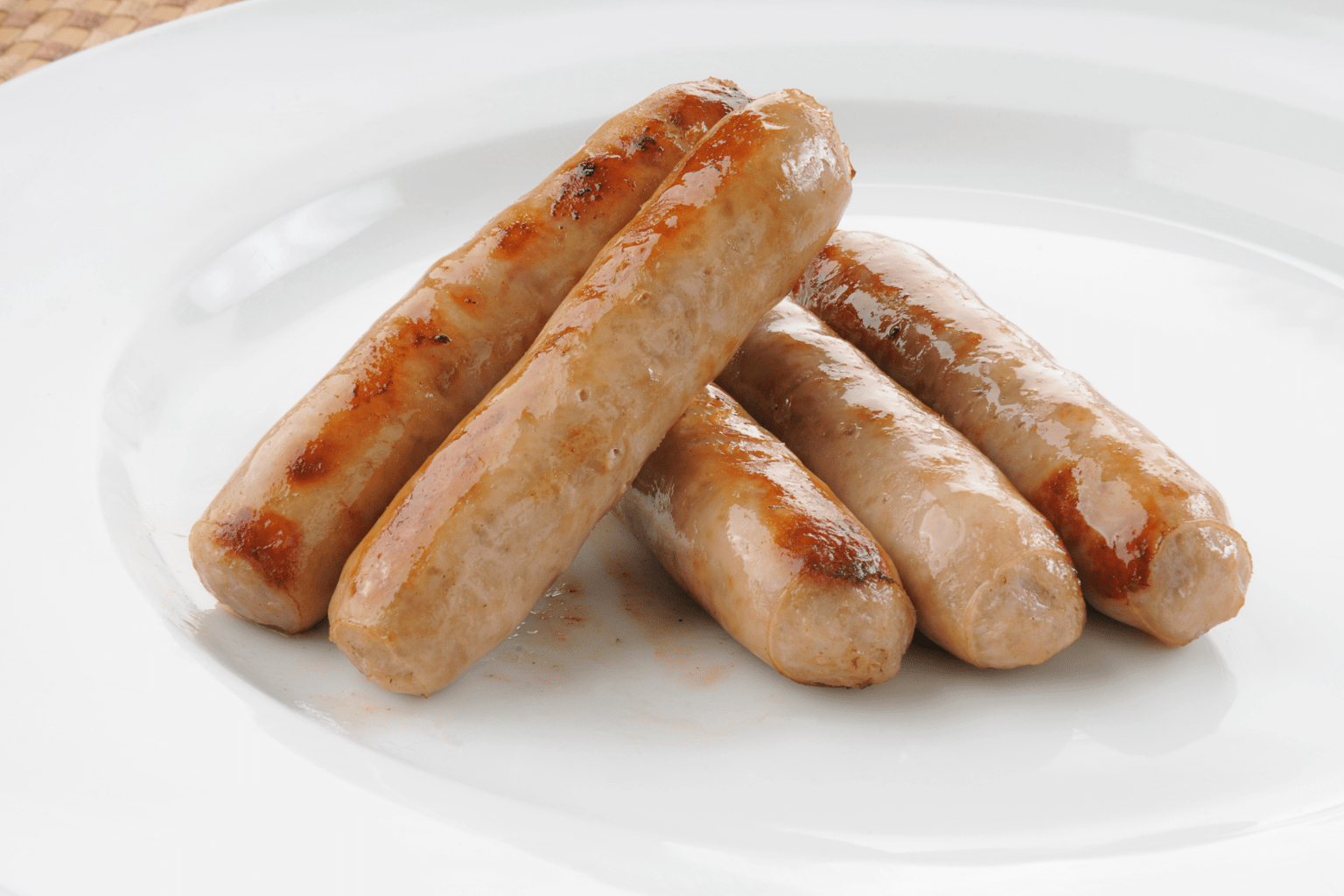
A DAM consulting firm was testing an AI labeling tool on a collection of brand images. In one photo, there was a baby reaching toward the camera. The AI returned its labels, but one of them was sausage.
Technically, you can see how it got there. AI excels at picking up patterns, and the shape, the color, the texture matched what the model had been trained to recognize. But anyone looking at the image knew immediately what it actually was: a baby’s arm.
That gap between what AI detects and what humans understand is exactly where most labeling systems fall short, and it matters more than most people realize.

What Most Labeling Systems Actually Do
Today’s most widely used tools, including platforms like Amazon Rekognition and Google Vision, are very good at identifying objects. They can scan an image and return a list of things that are present with impressive speed and accuracy.
Fundamentally, they are answering a narrow question: what is in this image?
The output is often a collection of disconnected terms: objects, categories, and sometimes basic attributes. These are useful at a surface level but limited in context, because that’s not how people think about images.
When someone searches a digital asset library or a stock photography site, they aren’t looking for isolated objects. They are trying to find meaning. A moment. A situation. Something that matches an idea in their head.
There’s a difference between identifying what’s visible and understanding what’s happening.
Where Traditional Labels Break Down
This is where the “sausage” problem starts to show up.
When AI models evaluate images piece by piece without fully understanding the relationships between elements, they can produce labels that are technically defensible but practically useless. Or worse, misleading.
A baby’s arm becomes a sausage. A child blowing out birthday candles becomes “cake, person, fire.” A business meeting becomes “people sitting, table, laptop.” A meaningful moment gets reduced to a handful of generic tags.
Even when the labels are correct, they often lack the context that makes them valuable. Knowing there is “grass” and “sky” in an image doesn’t help someone find “kids playing soccer.”
For businesses relying on metadata to power search, discovery, and organization, this creates a real problem. The system may be working exactly as designed, but it still doesn’t align with how users actually look for content.
Why Human-Centric Labels Matter
If humans are the ones searching, the metadata should reflect how humans describe images.
That means moving beyond isolated objects and toward more descriptive, contextual labeling. Not just identifying elements, but interpreting how they come together.
Instead of a list of keywords, the output starts to feel more like a natural description. It captures scenes, relationships, and intent.
The difference between object detection and human-centric labels is what allows someone to search in a natural way and actually find what they’re looking for without having to guess which keywords the system might recognize.
This becomes especially important in environments like DAM systems and stock photography platforms where the ability to quickly surface the right image directly impacts efficiency, usability, and even revenue.
How MediaViz Approaches Labeling Differently
At MediaViz, our approach is built around descriptors that look at the image as a whole. Instead of isolating elements, the system evaluates how those elements relate to each other and what the scene represents overall.
That includes applying confidence thresholds and layering analysis so that the output reflects not just what could be in the image, but what is most likely actually happening.
This is how you avoid the “sausage” problem.
By giving the system more context, more perspective, and more structure, you move closer to the way a human would interpret the same image. The result is labeling that feels more natural, more accurate, and far more useful.
From Better Labels to Better Search
Search is evolving quickly. Many platforms are moving toward semantic or natural language search, where users can describe what they’re looking for instead of relying on exact keywords. These systems aim to interpret meaning, not just match terms.
Even as search improves, the underlying challenge remains the same: how well the content itself is understood.
Before someone ever types a query, they’ve already perceived the image. They’ve interpreted what’s happening and translated that understanding into language. Search is simply the output of that process.
If an image is only represented by a handful of disconnected objects, the system has to do more work at search time to figure out what it actually represents. Sometimes it succeeds. Other times, the results feel close, but not quite right.
At MediaViz, we’ve taken a different approach.
By focusing first on how images are perceived (capturing scenes, relationships, and intent through more descriptive labeling), we’re building a stronger foundation for how that content can be used later, including search.
This is also where things are going.
As we continue to expand our capabilities, that same human-centric understanding is what enables more advanced ways of interacting with content, including semantic search, as a natural extension of how the images were understood from the start.
Better Labels Lead to Better Outcomes
This shift in labeling directly impacts how businesses use their image libraries.
More descriptive, human-centric labels make search more intuitive. They reduce the friction between what a user is thinking and what the system can return. They also improve consistency across large collections, which is critical for teams managing thousands or millions of assets.
In markets like DAM and stock photography, that translates into faster workflows, better discovery, and stronger engagement with content.
At the end of the day, labeling is about making images discoverable and usable.